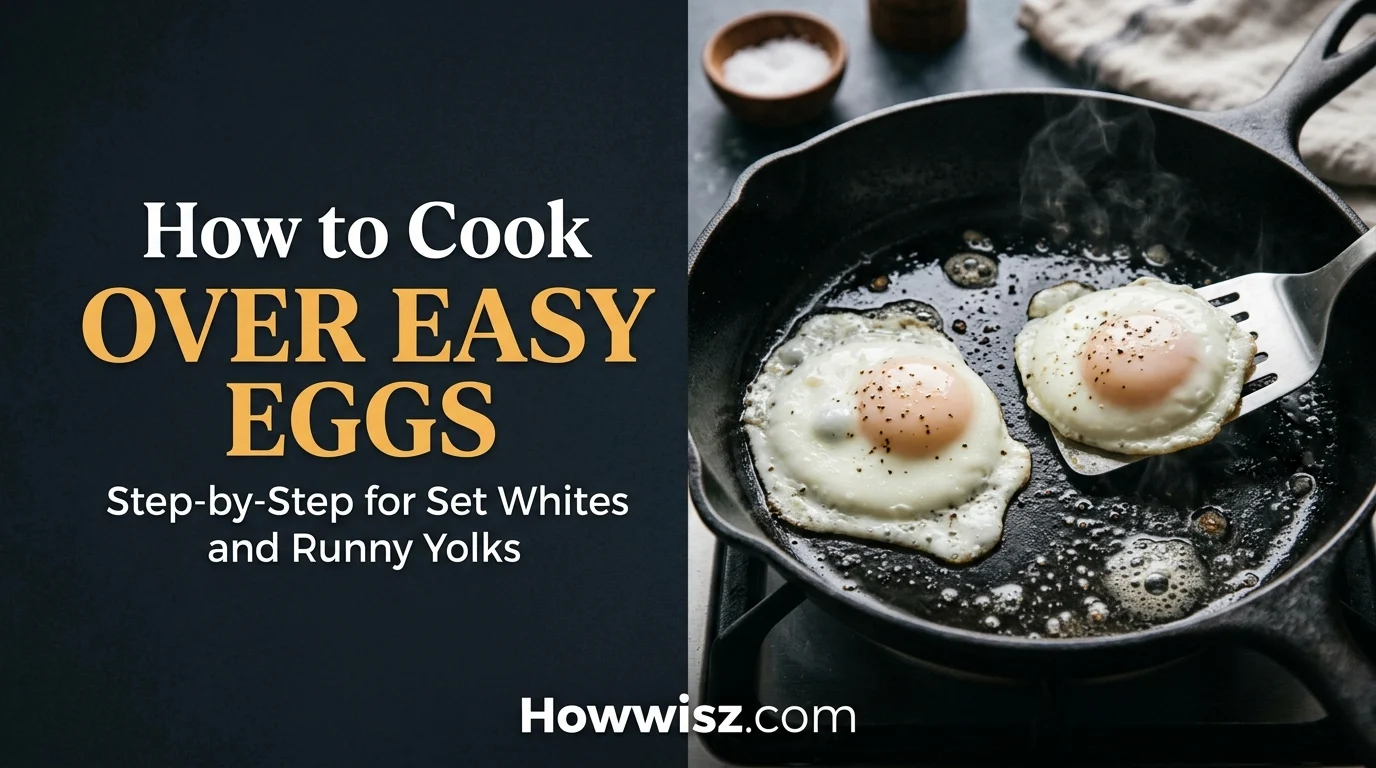
If you’ve ever flipped an egg and ended up with a broken yolk or rubbery whites, you’re not alone. Over easy eggs look simple, but the details matter: heat level, pan choice, and flipping technique.
This guide covers the exact steps, the right timing, and fixes for the most common problems.
Quick Answer
To cook over easy eggs: Heat a nonstick skillet over medium-low heat with a little butter or oil. Crack in the eggs and cook about 2 to 3 minutes, until the whites are fully set. Gently flip each egg and cook 15 to 30 seconds more, just long enough to cook the thin film over the yolk while keeping the center runny. Slide onto a plate and serve right away.
What Are Over Easy Eggs?
Over easy eggs are fried eggs flipped once and cooked briefly on the second side. The whites are completely set, and the yolk stays liquid and warm. They sit between other styles:
| Style | Flipped? | Yolk |
| Sunny-side up | No | Runny, top uncooked |
| Over easy | Yes, briefly | Runny |
| Over medium | Yes, longer | Soft, jammy center |
| Over hard | Yes, longest | Fully set |
What You’ll Need
- 2 eggs (the fresher, the better, since fresh whites hold together more tightly)
- 1 tablespoon butter, or 1 to 2 teaspoons oil
- A 8- to 10-inch nonstick or well-seasoned cast-iron skillet
- A thin, flexible spatula (a fish spatula works well)
- Salt and pepper
How to Cook Over Easy Eggs: Step by Step
- Crack the eggs into a small bowl or ramekin first. This lets you check for shell bits and slide the eggs into the pan without breaking the yolks.
- Heat the pan over medium-low. Add the butter and let it melt and foam slightly. If it browns quickly, the pan is too hot.
- Slide the eggs in gently. Leave space between them so they’re easy to flip.
- Cook 2 to 3 minutes. Wait until the whites are opaque and no longer jiggly, especially around the yolk. Season with salt and pepper.
- Slide the spatula fully under the egg. Make sure it supports the whole egg, yolk included.
- Flip in one quick, low motion. Don’t lift the egg high; turn it over close to the pan.
- Cook 15 to 30 seconds. This is just enough to set the surface of the yolk. Longer gives you over medium.
- Slide onto a plate and serve immediately. The yolk keeps cooking from residual heat.
Tips for Perfect Over Easy Eggs
- Keep the heat gentle. High heat crisps the edges and overcooks the whites before the yolk is ready.
- Use enough fat. A thin layer of butter or oil helps the eggs release cleanly.
- Try the basting method. Instead of flipping, spoon some hot butter over the yolk for a few seconds, or add a splash of water and cover the pan briefly. This gives you a similar result with less breakage, though it isn’t technically over easy.
- Cook one or two eggs at a time until you’re comfortable with the flip.
- Season at the end if you prefer. Salt can leave small spots on the yolk if sprinkled directly on top early.
Common Mistakes to Avoid
- Flipping too early. If the whites around the yolk are still translucent, they can slide off or tear.
- Using a pan that sticks. A scratched nonstick pan or an unseasoned pan is the top cause of broken yolks.
- Pan too hot. You’ll get brown, lacy, tough edges.
- Using a thick, clumsy spatula. A thin spatula slips under the egg without tearing it.
- Waiting too long after flipping. A few extra seconds can turn a runny yolk into a firm one.
Are Runny Eggs Safe?
Eggs with runny yolks are cooked less than the guideline. The USDA advises cooking eggs until both the yolk and white are firm, which corresponds to an internal temperature of 160°F, to reduce the risk of foodborne illness. Young children, older adults, pregnant women, and people with weakened immune systems are generally advised to avoid runny yolks. If you want an over easy style egg with less risk, look for pasteurized shell eggs, and keep eggs refrigerated until you cook them.
What to Serve With Over Easy Eggs
- Buttered toast, ideal for dipping the yolk
- Hash browns or breakfast potatoes
- Bacon, sausage, or ham
- Avocado toast
- Rice or grain bowls with vegetables
- A burger or sandwich topped with a fried egg
FAQs
How long do you cook over easy eggs?
About 2 to 3 minutes on the first side, then 15 to 30 seconds after flipping. Exact timing depends on your pan and heat.
What’s the difference between over easy and sunny-side up?
Sunny-side up eggs aren’t flipped, so the top of the yolk stays uncooked. Over easy eggs are flipped briefly so a thin layer of the yolk sets while the center stays runny.
How do you flip an egg without breaking the yolk?
Wait until the whites are fully set, use a thin spatula, slide it all the way under the egg, and flip close to the pan in one smooth motion.
What pan is best for over easy eggs?
A nonstick skillet is the easiest for beginners. A well-seasoned cast-iron pan also works if you use enough butter or oil.
Should I use butter or oil?
Either works. Butter adds flavor but can brown faster, so keep the heat low. Oil has a higher smoke point and is more forgiving.
Why do my over easy eggs have rubbery whites?
The heat is usually too high or the eggs cooked too long. Lower the heat and take them off as soon as the whites are set.
Can I make over easy eggs without flipping?
You can use the basting or covered-pan method to cook the top of the egg. The result is close, but it’s technically a basted egg rather than over easy.
Conclusion
Over easy eggs come down to three things: gentle heat, a pan that doesn’t stick, and a confident flip. Cook until the whites are set, flip once, and pull the eggs after a few seconds so the yolk stays runny. A few tries will give you consistent results. If you’re serving anyone who should avoid runny yolks, cook the eggs longer or use pasteurized eggs.